
HORMOANS
Gripes about suppression of hormones, science and sanity…and about a duo of dangerous dames

hormone n. Biochem. a substance produced in an organism and transported in body fluids such as blood to stimulate specific cells or tissues into action
gender dysphoria n. psychological distress resulting from an incongruence between a person’s sex at birth (male or female) and the person’s gender identity
gender identity n. a person’s innate sense of gender, as opposed to their sex at birth
gender (who knows…but perhaps) n. a person’s psychological sense of whether they are a male, female or something else, as opposed to what their physical characteristics, genes and hormones indicate
Brilliant Berthold, Bird Botherer
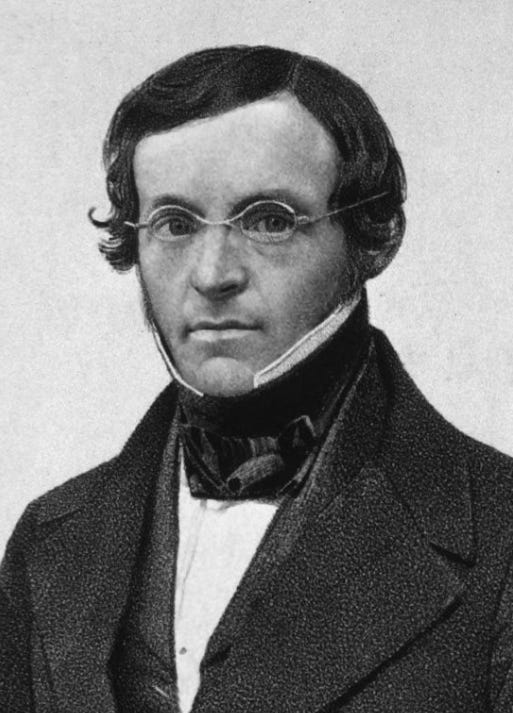
Arnold Adolph Berthold was a German scientist who became interested in the effects of glands.
Testicles are a type of mammalian gland that produce the hormone testosterone, the primary male sex hormone. A (An?) eunuch is a man who has been castrated; that is, he has had his testicles removed and therefore produces little if any testosterone. (Perhaps the most famous eunuch in history was Zheng He, the formidable Chinese Admiral who was 7 feet tall.)
Castrati were a particular subset of eunuch; a castrato was a male who was castrated before puberty in order to stop the production of testosterone, with the aim of preventing the development of an Adam’s apple and preserving his youthful singing voice.
Berthold observed that Castrati not only retained their youthful voices but grew abnormally tall, with little muscle tone. He thus instinctively felt that messing with the human body’s glands (hormones) is a tricky business, fraught with risks of untoward consequences.
Stimulated by his observations of Castrati, Berthold decided to experiment with the “testes” – that’s the general term for organs that produce male reproductive cells - of cock chickens, better known as roosters (roosters don’t actually have cocks).
In the late 1840s, Berthold commandeered six roosters and removed the testes from four of them. The two uncastrated roosters developed normal secondary sex characteristics for roosters: aggression, muscles and predilections for regular sex. Each uncastrated rooster also developed a typical cockscomb (nothing to do with a penis, which a rooster as indicated doesn’t have; a “cockscomb” is his head crest) and a wattle (fleshy caruncle – great word! - hanging from his head and neck). The castrated roosters on the other hand became docile, with tasty tender flesh.
Berthold put testes back into the abdomens of two of the castrated roosters, in different places from where rooster testes are normally located. These re-testeed roosters then developed customary Rooster secondary sex characteristics. By achieving this testosterone re-boot, Berthold proved that:
wherever positioned in the body, glands produce hormones that permeate the body
drastic things can happen, throughout an organism, if hormones are removed
Puberty Blocker Shocker
Puberty blockers are medications that suppresses puberty in adolescents. Puberty blockers are administered to gender dysmorphic children to delay puberty (i.e., the development of secondary sex characteristics), purportedly in order to give a gender dysphoric child time to decide their “gender identity”. The purported aim is to avoid the child getting too far down the track to becoming an adult person of their biological sex, so that – with the delay in puberty - they can decide later whether to take actions (through hormones and/or surgery) designed to make the individual appear like they are the opposite sex to their biological sex - commonly known as “Trans”.
Trans is currently trendy. It’s cool to be Trans, and “progressive” to think that Trans is the best thing since Sliced Bread, or Christ Bled, or…whatever.
Puberty blockers work by suppressing the production of sex hormones, principally testosterone and oestrogen (the primary female sex hormone). There’s much debate about whether the effects of puberty blockers are reversible. Reversibility is of course important because - whether or not the individual wishes to “transition” to a gender that is not aligned with their biological sex - it’s undesirable for the individual to endure life-long adverse effects from the puberty blockers, certainly not without receiving professional medical advice and having made a fully informed decision to accept those effects.
To be clear, there’s no good reason to be absolutely opposed to puberty blockers for gender dysphoric youths. But neither should a medicine that has profound effects on the patient’s physical and mental condition be doled out like lollies, which is where New Zealand has been going.
Until very recently, New Zealand’s Ministry of Health confidently and unreservedly claimed that puberty blockers are a “safe and reversible medicine”. In doing so, the Ministry was following guidelines promulgated the Professional Association for Transgender Health Aotearoa (PATHA).
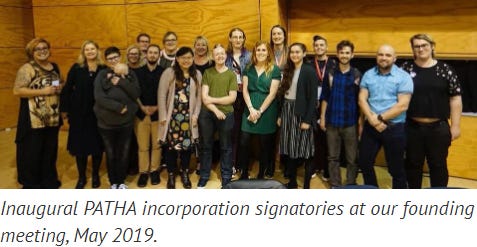
Unfortunately, it’s never been that simple. The Ministry of Health’s stance has been far more ideological than science-based. It’s tenably clear the Ministry felt that to suggest the effects of puberty blockers may not be reversible would be “Transphobic”; that is, being nasty to Trans people.
The well-established science is that puberty blockers do indeed have effects that are irreversible. The irreversible effects mainly relate to what puberty blockers do – drastically reduce sex hormones – and include sexual dysfunction, vaginal/penile atrophy and infertility. They also include inhibited development of brain frontal lobe functions controlling decision making, emotional regulation, judgement and planning. And these effects kick in at exactly the time when secondary sex characteristics and brain function would otherwise be developing. Other adverse effects include osteoporosis, hot flashes, man-boobs (for males), fatigue, weight gain, fluid retention and decreased libido.
Given the irreversible effects of puberty blockers, one would hope that they are used judiciously on adolescents, with the informed consent of the adolescent and close family involvement. Not so. Many New Zealand kids have taken puberty blockers without parental knowledge or involvement. While it’s not clear how many New Zealand children are currently taking puberty blockers, the official figures are that, from 2010 (when puberty blockers were first used in New Zealand) to the end of 2020, the number of children taking puberty blockers increased from 137 to 703. New Zealand children as young as 7 years of age have been dosed with puberty blockers.


Who, you may ask, are driving New Zealand’s sky-rocketing use of puberty blockers on supposedly gender-dysphoric children. The answer to that question is easy enough; Dame Sue Bagshaw, who I covered in my earlier Substack NEW ZEALAND’S TOP TEN IMPORTED PESTS, in tandem with Dr Rachel Johnson, a central figure in the above-mentioned PATHA organisation. Along with Bagshaw, Johnson appears to be of English extraction. And they’ve got much more puberty-blocker latitude in New Zealand than they would have in England, which has moved against treating the prescribing of puberty blockers as some sort of joyous Rainbow lolly scramble (Google “Tavistock puberty blockers” for more).
There are two essential problems with the Bagshaw and Johnson. The first is a problem that’s common to all ideologues; they’re perfectly willing to tell lies in pursuit of their ideological crusade. Neither is an unqualified fool. So when they each assert that the effects of puberty blockers are reversible, they’re deliberately telling unethical lies, and doing so as medical “professionals”. They second is that they’re being disingenuous when they say that they’re prescribing puberty blockers to simply buy some time for youths to make their own informed decisions on whether they wish to be Trans. In truth, they see puberty blockers as an intermediate step on the road to becoming Trans.
What can we take from this? The indisputable conclusion to be drawn is that, in the area of puberty blockers, New Zealand’s Ministry of Health is ideologically rather than scientifically driven and cannot be trusted to safeguard the health and wellbeing of some of New Zealand’s most vulnerable young people.
Now you may be tempted to assert, in defense of Bagshaw and Johnson, that, as ideologically loopy as they are, they are at least sincere in their beliefs they’re doing good for gender dysphoric youths. To which I submit, for the prosecution - sincerity is no defense for bad behaviour. A certain Austrian gent whose Christian name was almost the same as Arnold Berthold’s middle name was ardently sincere in his beliefs.